The Layer Under Your Tiles: A Bathroom Waterproofing Membrane Guide
Tiles and grout do not stop water on their own. Here is what waterproofing membrane work involves, where it goes in a bathroom, and why it has to be right before tiling.
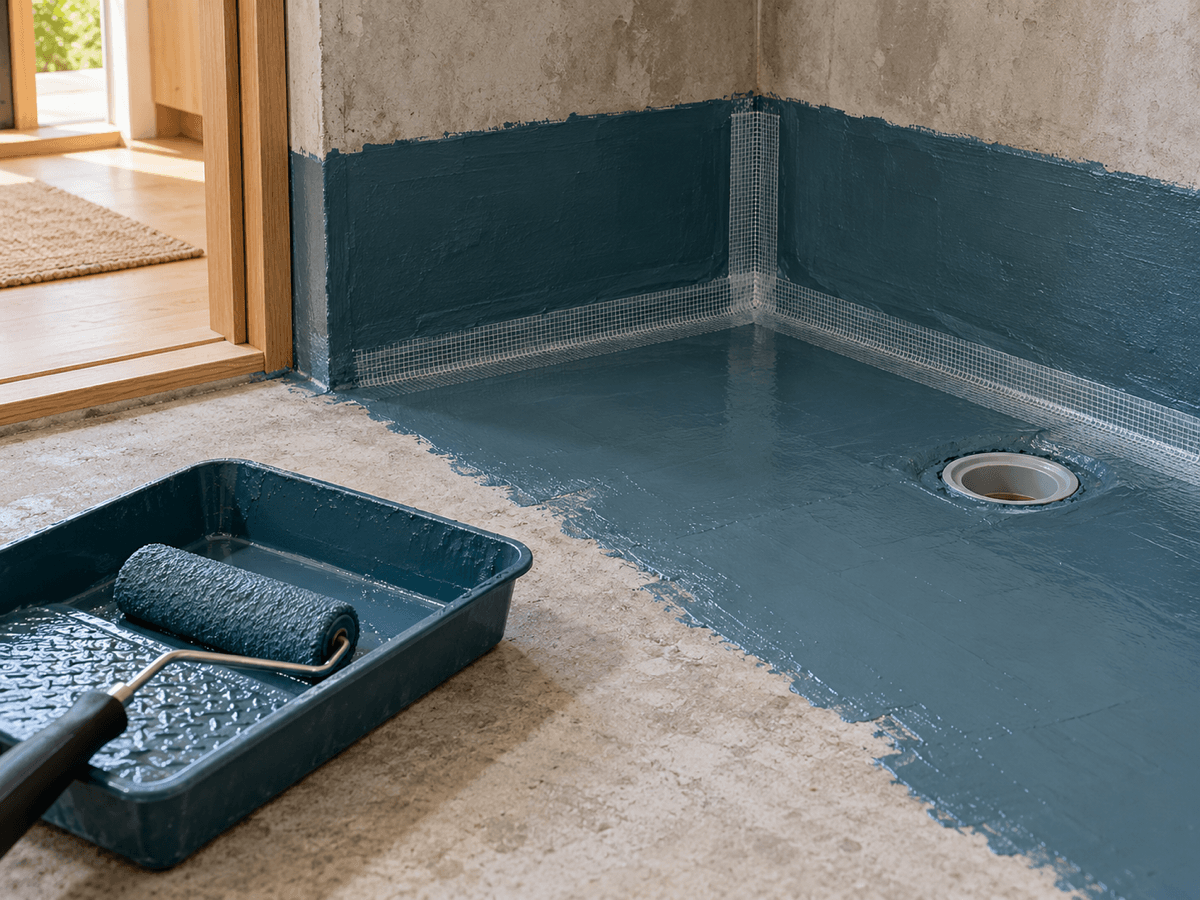
Most people assume the tiles keep water inside a bathroom. They do not, at least not on their own. Grout lines are porous, tile edges have joints, and every pipe and floor trap is a hole through the surface. Over time, water finds its way through. What actually keeps it in the room is a layer you never see once the work is done: the waterproofing membrane.
This guide explains what membrane work involves, where it should go, and why it has to be finished and checked before a single tile is laid.
What a waterproofing membrane is
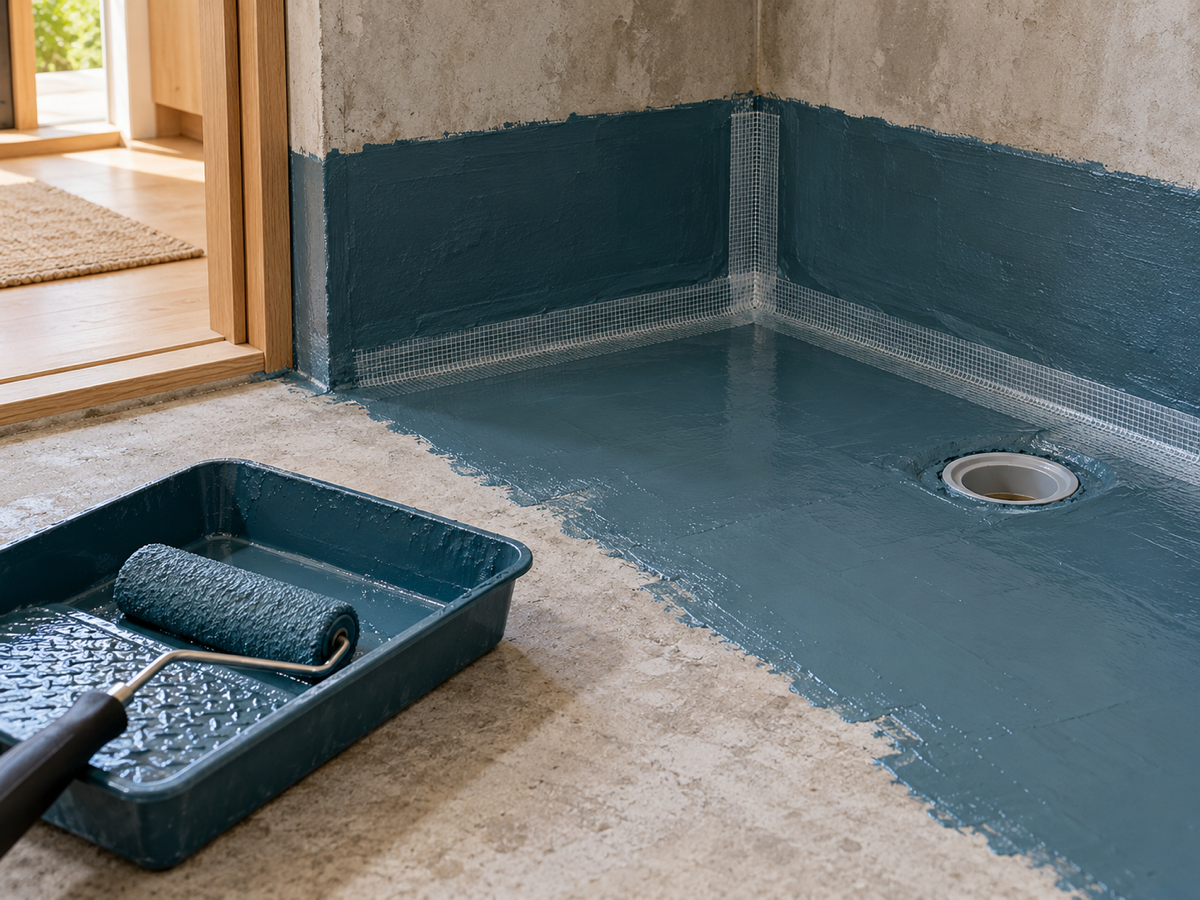
A waterproofing membrane is a continuous, water-resistant layer applied over the prepared floor and the lower part of the walls, beneath the tile bed. In home bathrooms it is commonly a liquid-applied coating that is brushed or rolled on in more than one coat, with reinforcing tape or fabric bedded into the corners, joints and around pipes. Sheet membranes are another option in some situations.
The word that matters is continuous. A membrane with a gap at a corner or a break around a pipe is only as good as its weakest point, so the detailing at edges counts as much as the open floor area.
Where the membrane goes
The whole floor
The entire bathroom floor should be covered, not just the shower corner. Water from a shower spreads, floors get mopped, and splashes from the basin land everywhere.
The upturn at the walls
Where the floor meets the walls, the membrane should turn up the wall rather than stop at the edge. This upturn stops water that pools at the skirting line from slipping into the joint between floor and wall.
The shower area walls
Inside the shower zone, walls take direct spray. The membrane on these walls is normally taken higher than elsewhere in the room so that the wettest surfaces are protected.
Pipes, floor traps and corners
- Around the floor trap, where water collects and drains away
- Around every pipe that passes through the floor or wall
- Internal corners and junctions, where movement can open a crack
These are the details that usually fail first, which is why they receive reinforcement rather than a single coat.
Why it must come before tiling
Once tiles are laid, the membrane is sealed away. If it was skipped, rushed or left with gaps, the only way to fix it is to break out the tiles above it. That is why the order of work matters:
- Remove old finishes and repair the base surface
- Form the floor so it slopes towards the floor trap
- Apply the membrane, with reinforcement at corners, joints and pipes
- Allow it to cure as the product requires
- Check it, often with a water ponding test on the floor
- Only then lay the tile bed and tiles
Getting the slope right before the membrane goes down also matters. A floor that does not fall towards the trap leaves standing water that sits on the grout every time the shower is used.
Signs a bathroom may need new waterproofing
- Damp patches or stains on the ceiling below an upper-floor bathroom
- Peeling paint or damp on the wall outside the bathroom
- Swollen door frames or skirting near the bathroom door
- Loose or hollow-sounding floor tiles
- Dark, constantly damp grout lines and a musty smell
In condominiums and apartments, a failed membrane often shows up in the unit below before the owner notices anything, which makes it worth checking early.
Why it matters in Malaysian homes
Malaysia is humid all year, and most households use the bathroom heavily, with a wet floor much of the time. Many homes also have a wet-style bathroom with no separate shower tray, so the whole floor is exposed. In those conditions, a weak membrane does not stay hidden for long.
How waterproofing is quoted
At BathWorks Malaysia, waterproofing starts from RM1,500 per job and is also part of a full bathroom renovation, which starts from RM5,000 per project. In a written, itemised quotation it appears as its own line, with the areas it covers stated. If damage is found under the old tiles, such as a leaking pipe, it is photographed and priced for your approval before that work continues.
You can see where waterproofing sits among our other renovation services. Owners in Shah Alam, Ipoh and Seremban can also read the page for their town.
Seeing damp stains, or planning a retile? Send photos and rough measurements on WhatsApp and we will arrange a site visit. Get My Quote